

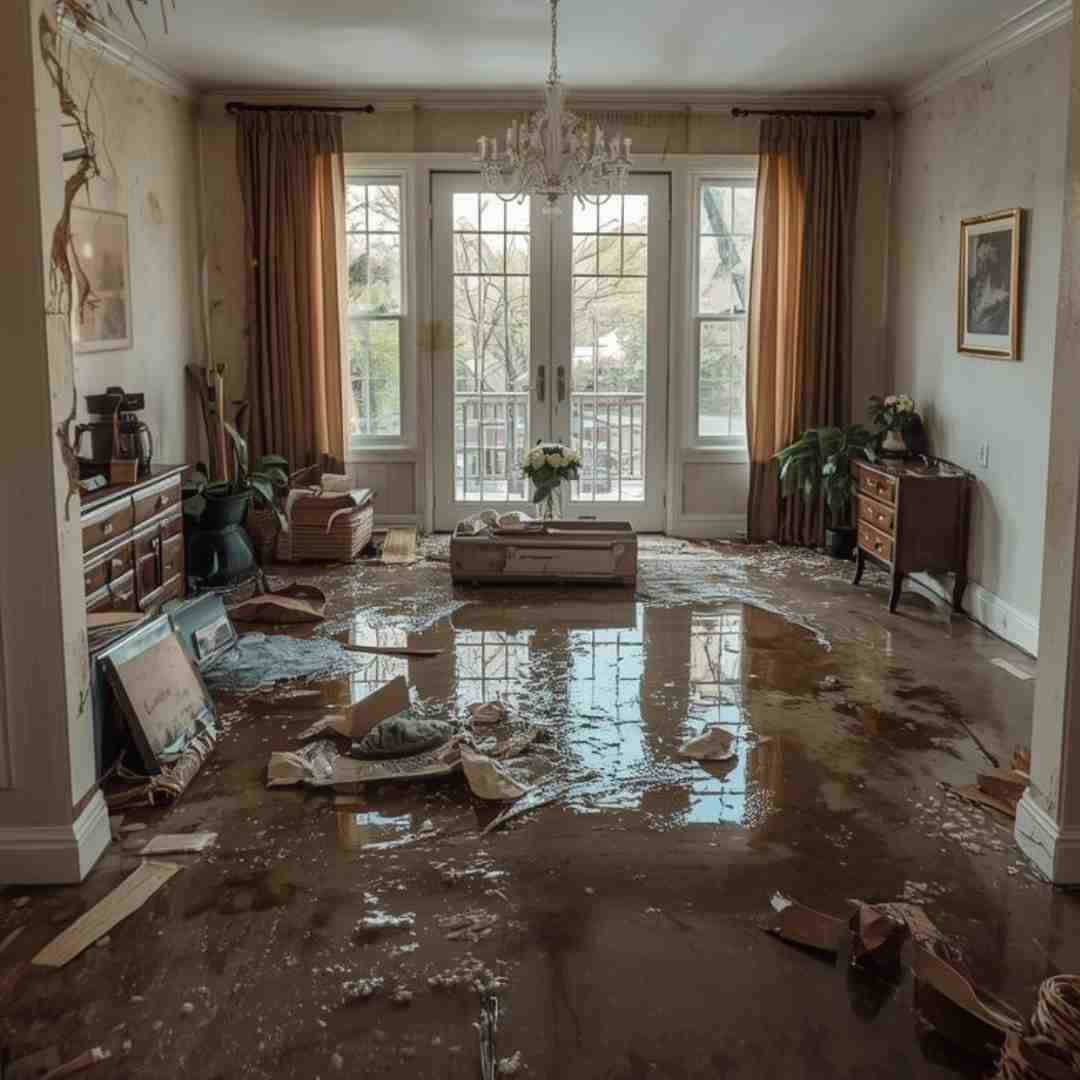
What Gets Removed During Sewage Cleanup
Carpeting & Padding – Always removed after sewage contact. Cannot be adequately sanitized.
Drywall – The bottom 12-24 inches (or more) of affected drywall is removed to prevent contamination spread.
Baseboards & Trim – Porous wood materials absorb sewage and require replacement.
Insulation – Any insulation contacted by sewage must be removed and replaced.
Damaged Flooring – Hardwood, laminate, or tile may need removal depending on contamination extent.
Personal Belongings – Non-salvageable items contaminated by sewage are documented and properly disposed of.
Sewage Cleanup Safety Protocols
Our certified technicians follow strict safety procedures:
Personal Protective Equipment (PPE) – Full-body protection prevents any contact with contaminants.
Containment Barriers – We isolate affected areas to prevent spreading contamination to clean spaces.
Negative Air Pressure – Specialized equipment ensures contaminated air flows away from clean areas.
Proper Disposal – All contaminated materials are bagged, sealed, and disposed of at approved facilities.
Tool Sanitization – Equipment used in sewage cleanup undergoes thorough disinfection afterward.
Health Monitoring – Our team receives regular health screenings and maintains current vaccinations.
Sewage Cleanup for Different Scenarios
Basement Sewage Backups
Lower levels commonly experience backups when main lines clog. We pump out sewage, remove contaminated materials, and sanitize thoroughly.
Bathroom Sewage Overflows
Toilet backups contaminate tile, grout, and nearby rooms. We contain the spread and restore your Kissimmee bathroom completely.
Crawl Space Contamination
Sewage in crawl spaces requires careful removal and sanitization to prevent ongoing odor and health issues.
Garage Sewage Issues
Floor drains backing up with sewage need professional cleanup to prevent contamination spreading into living spaces.
Commercial Sewage Emergencies
Businesses face liability and closure risks from sewage. We work quickly to remediate and get your Osceola County business operational.
Preventing Sewage Backups
While we can’t prevent all backups, these steps reduce your risk:
Proper Disposal – Only flush toilet paper. Never flush wipes, feminine products, or other items.
Grease Management – Don’t pour grease down drains. It solidifies and creates blockages.
Tree Management – Keep large trees away from sewer lines or have lines inspected regularly for root intrusion.
Regular Maintenance – Have your lateral line and main connection inspected periodically.
Backwater Valve Installation – These devices prevent municipal sewer backups from entering your Kissimmee property.
Septic Pumping – Maintain your septic system according to manufacturer recommendations.
Insurance Coverage for Sewage Damage
Sewage backup coverage varies significantly:
Sewer Backup Riders – Many policies require a separate sewer backup endorsement to cover this damage.
Coverage Limits – Sewer backup coverage typically has lower limits ($5,000-$25,000) than other water damage.
What’s Covered – Usually includes cleanup, damaged materials, and personal property.
What’s Not Covered – Lateral line repairs, septic system failures, or gradual damage often aren’t covered.
We help document your claim thoroughly to maximize coverage for your Osceola County property.
Why Sewage Requires Professional Cleanup
Health Protection – DIY cleanup exposes you to serious pathogens without proper equipment.
Complete Sanitization – Household cleaners can’t adequately disinfect sewage contamination.
Proper Disposal – Contaminated materials require special handling and disposal.
Structural Protection – We know exactly what materials must be removed to prevent long-term issues.
Code Compliance – Professional cleanup meets health department requirements.
Insurance Requirements – Policies typically require professional remediation for coverage.
Attempting sewage cleanup yourself risks your health and your Kissimmee property.
After Sewage Cleanup
Once cleanup is complete, we recommend:
Source Resolution – Address the cause (line repair, septic maintenance, etc.) to prevent recurrence.
Prevention Measures – Install backwater valves or update aging plumbing as appropriate.
Monitoring – Watch for any signs of moisture or odors in the weeks following cleanup.
Air Quality – Consider additional air quality testing if health concerns persist.
Documentation – Keep all cleanup records for future property transactions.
Sewage Emergency Response Times
Immediate Dispatch – We send crews within 30-60 minutes of your call for sewage emergencies.
24/7 Availability – Sewage backups don’t wait for business hours. Neither do we.
Complete Equipment – Our trucks carry everything needed to begin cleanup immediately.
No Delays – We never make you wait while we gather supplies or equipment.
Every hour sewage remains in your Osceola County property increases health risks and damage.
Sewage Cleanup Service Areas
We provide emergency sewage cleanup throughout:
- Kissimmee
- St. Cloud
- Poinciana
- Celebration
- Hunters Creek
- Buenaventura Lakes
- Campbell
- Southchase
- Meadow Woods
- Williamsburg
- All of Osceola County
Our rapid response covers the entire region with professional sewage remediation services.
What to Do During a Sewage Emergency
Evacuate – Get family and pets away from contaminated areas immediately.
Don’t Touch – Avoid any contact with sewage water or contaminated items.
Turn Off Water – If possible, shut off water to prevent additional flow.
Ventilate – Open windows and doors to improve air circulation.
Don’t Use Plumbing – Stop using sinks, toilets, and drains until professionals assess the situation.
Call Immediately – Contact our Kissimmee sewage cleanup team right away for emergency response.
Document – Take photos from a safe distance for insurance purposes.
Cost of Sewage Cleanup
Pricing depends on:
- Extent of contamination
- Amount of material requiring removal
- Size of affected area
- Accessibility challenges
- Whether additional repairs are needed
We provide honest estimates before beginning work. Many Osceola County homeowners find their insurance covers most or all costs with proper sewer backup coverage.